Impact glass and tektites
Due to its high speed a cosmic body hitting the Earth has enormous energy which results in great heat and deformation of the Earth's surface at the moment of impact. A crater is formed at the impact site, and crushed and variously remelted rocks can be found both in the crater and its surroundings. The impact glasses formed in this way are striking in their appearance - molten material that solidified so quickly that it was not possible for the mineral grains to recrystallize. Impact glasses located in the crater or in its close vicinity are usually chemically inhomogeneous.Tektites are a special type of impact glass that forms in the initial phase of an impact, just before the meteorite actually buries itself into the ground. The blast wave itself, created just before the meteorite strikes, can melt the surface layer of rocks. If the asteroid hits the ground at an acute angle, the molten mass is literally ejected by a shock wave in a liquid state, hundreds to thousands of kilometres away from the crater. These pieces which are very well melted and homogeneous, solidify during their flight through the air and land on the area referred to as the "fall field."
Examples of impact glasses
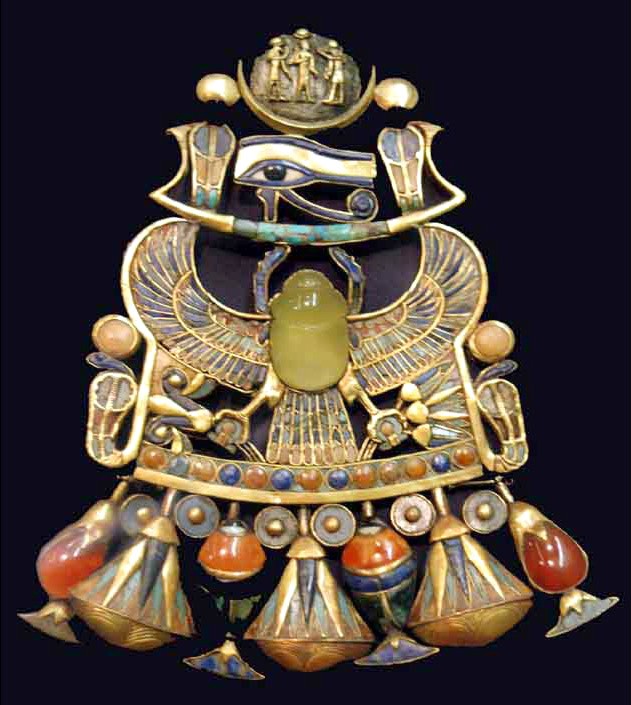
The most famous impact glass is Libyan desert glass, whitish with yellow to green hues, found on the border of Libya and Egypt in an area known as the Great Sand Sea. It occurs in irregular, often large pieces, which indicate a very short transport or even no transport at all. However, the source crater has not yet been confirmed. Although it may still be hidden under the dunes of the Great Sand Sea, according to recent research, there is no crater. The sand was apparently melted by the heat of an exploding comet that hit Earth, but its core was not large enough to penetrate the atmosphere and reach all the way to the ground.This natural glass was already known and used by the ancient Egyptians, and it was highly valued, as demonstrated by Tutankhamun's jewellery featuring a yellow scarab with Libyan desert glass at its centre.
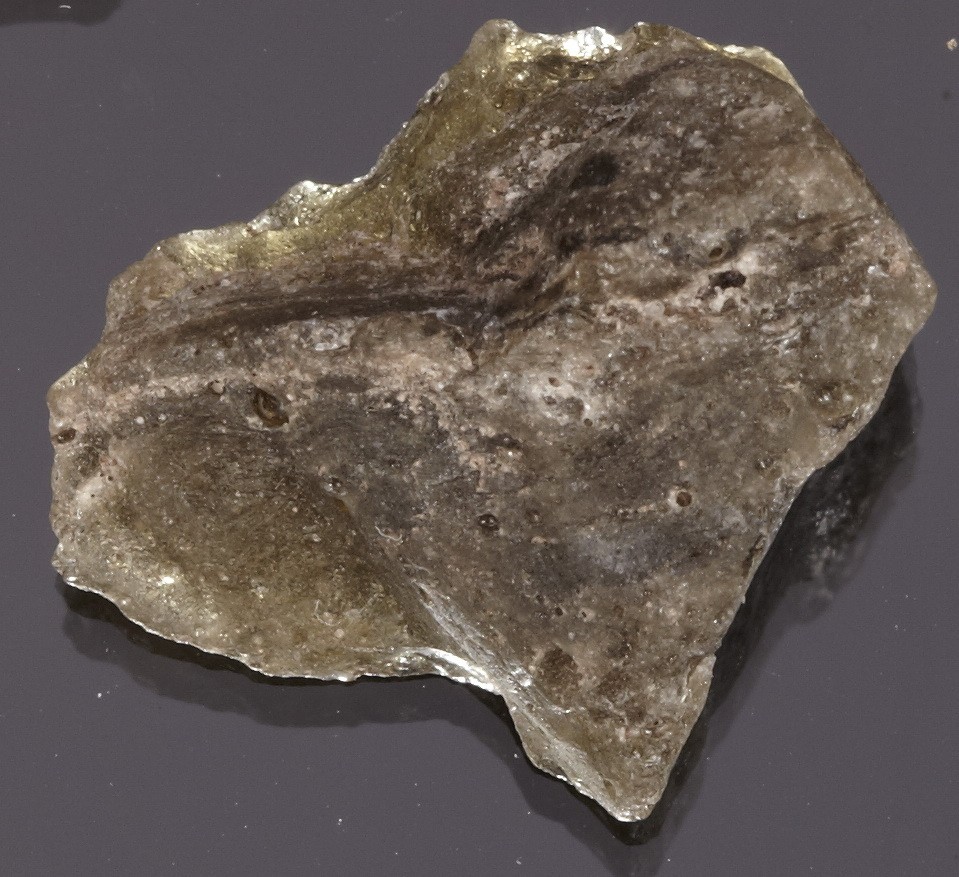
Darwin glass from the vicinity of the Darwin Crater in Tasmania varies in colour from greenish grey to bright green.
Tektites
We designate tektites according to the place of discovery or impact. As a rule, tektites are found first and then the search for the crater they could have originated from begins.
North American tektites
The oldest known are North American tektites, georgiaite and bediasites, some 35.4 million years old. They are generally associated with the formation of a massive crater beneath today's Chesapeake Bay.
Central European tektites (vltaviny, internationally referred to as moldavites)
Are undoubtedly the most beautiful of all tektites. They are the only tektites in the world characterized by perfect clarity and a wide range of green colours. They flew through the air to Bohemia from the Ries crater in today's Bavaria about 15 million years ago.
African tektites (ivorites)
Ivorites come from the Bosumtwi crater in Ghana, Africa. These stones flew through the air, regardless of today's political boundaries, and are on the territory of a different state than the crater they originally came from. As their name suggests, they landed on the territory of today's Ivory Coast.
Australasian tektites
The youngest, and at the same time the largest in both number and size, are the Australian tektites, which are found on a large area of Southeast Asia and Australia. They are usually designated according to the more specific area of the discovery, such as indochinite, billitonite, filipinite, javaite, australite, etc. The crater they originate from has not yet been discovered, but it is known that it was created about 760,000 years ago.
Later discovered and less well-known are tektites from Belize, Uruguay and Brazil. Each of these South American glasses belongs to a different crater, which has so far only been determined in the case of Belize tektites: Pantasma in neighbouring Nicaragua.




